The founders
It didn’t start today. It started thirty years ago.
ATAILA has two founders. Attila Macskásy’s thirty years in infrastructure and Adrienn Dénes’s seventeen in banking risk and finance are below, era by era.

Attila Macskásy
Founder & CTO
I’m Attila Macskásy, a Hungarian infrastructure engineer and cloud architect. ATAILA didn’t start today. It started about thirty years ago, and almost every part of it is something I’ve built, sold or run at some point. This is how that happened.
Era by era
- 1992
A Commodore Plus/4 and no games
As a kid I wanted to repair televisions. Ours kept breaking, and the repairman who came to fix it seemed like a magician to me. Then, when I was 12, my cousin brought a Commodore Plus/4 back from Vienna. It had almost no games on it. With nothing to play, I learned BASIC instead. That set the pattern for everything after: understand the hardware first, then program it. I’m still doing it.
- 1998 1998 to 2003
Ericsson: datacentres and web applications
My first serious job was at Ericsson. I ran the server room for a thousand users, which is where I learned what keeps a datacentre standing. Then, in 1998, I built Ericsson Hungary’s intranet, a dynamic, database-backed web application. So in one job I was doing both halves: the infrastructure underneath and the software on top. I’ve never stopped doing both.
- 2001 For about ten years
My own service provider
In 2001 I started my own hosting business and ran it for about a decade. The stack covered ASP, SQL Server, LAMP, VMware and Zimbra. Alongside it, I wrote fraud-detection PL/SQL for a telco, against one of the largest Oracle databases in the country. Running a service for paying customers teaches you things a slide deck can’t. You learn the failure modes because you’re the one they happen to. That’s why we built the Service Provider edition.
- 2009 2009 to 2013
VMware: the first VDI in Hungary
By then I was writing about virtualisation, and my blog had become the most-read one on the subject in Hungary. That was part of the reason VMware hired me as its first systems engineer in the country. I brought Virtual Desktop to the Hungarian market and gave a keynote to more than 600 people. I also grew the Budapest VMware User Group into the largest in Central and Eastern Europe.
- 2013 2013 to 2014
Virtual Instruments, San Jose
Next came a Silicon Valley startup. Virtual Instruments sold infrastructure performance management to the largest datacentres in the region. The work was deep in the plumbing: dual SAN fabrics, Fibre Channel zoning, latency measured in microseconds at enterprise scale. It was also a crash course in how venture-backed companies actually operate. It was a short chapter, but it taught me to measure a datacentre before describing it.
- 2014 2014 to 2021
Microsoft: cloud on hardware you own
Then came seven years at Microsoft, on a worldwide hosting team. My job was to help the biggest service providers in Central and Eastern Europe put Azure technology inside their own datacentres: Cloud OS Network, Windows Azure Pack, then Azure Stack. For the Azure Stack launch, I took partners to Redmond. “Cloud on hardware you own” has been my theme ever since.
- 2021 2021 to 2024
The multi-cloud years
After Microsoft I went independent, then took multi-cloud architect roles across Azure, AWS, GCP, OCI and VMware. I collected the certifications, wrote the statements of work and delivered to enterprise standards. I also started cloudmigration.blog to share the research. For years it was about moving into the cloud. Today it’s about the deliberate way out.
- 2025 2025 to now
Back to the metal: private AI
By day I help keep a very large production platform running: distributed systems, DevSecOps, AI in production. On nights and weekends I build AI supercomputers on my own hardware: RTX 3090 and 4090 fleets, DGX-class machines, 200-gigabit interconnects, and open models served on silicon I own. I measure everything and publish it, failures included.
It started with one desktop in September 2025. I wrote at the time that running AI offline gives you privacy and independence. Even when you pay for cloud AI, you never quite know how much of your prompts and data is kept. On my setup, nothing leaves the lab. A year later that desktop has become a fleet, and I’m more convinced than I was then. ATAILA is that idea, built for customers to run themselves.
Amazon Web Services and AWS are trademarks of Amazon.com, Inc. or its affiliates. Other product names are trademarks of their respective owners.
ATAILA is this career, productised
The company is the same shape as the résumé. Each part of the platform exists because Attila has already run it: for an employer, for his own customers, or at home.
- A decade running his own hosting company
-
The ATAILA Service Provider edition: a multi-tenant platform for providers who run it for their own customers, from someone who has carried the pager himself.
- Seven years putting Azure into providers’ own datacentres
-
Cloud in the customer’s own datacentre, as a product: ATAILA Enterprise for one organisation and ATAILA Service Provider for a provider, with a migration path from Windows Azure Pack.
- Bringing Virtual Desktop to the Hungarian market in 2009
-
AI developer workstations: ready-made workstations for your developers, created automatically on your own platform.
- Intranets in 1998, full-stack ever since
-
The project factory: a web app created in minutes, built with AI, and moved from development to production with every step on record.
- AI machines built and measured at home
-
Loading models and metering them: open models on your own GPUs, with usage by user, model and endpoint, and every request logged. The sizing advice comes from someone who has measured his own GPUs at idle and under load.
The long version
Attila documents the hands-on work in public: machine builds with their real costs, measured tokens per second and watts at idle, and the failures, because that is where the learning is.
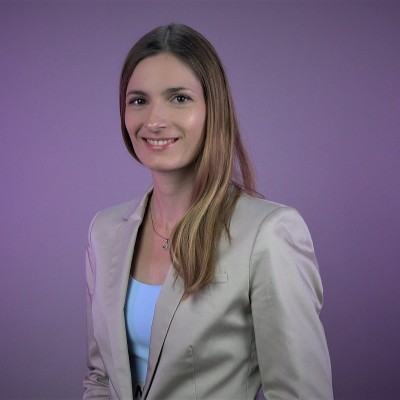
Adrienn Dénes
Co-Founder (CFO)
Adrienn Dénes is a risk analyst and modeller. Her banking career has run along the line where the business, the numbers and IT meet: she has done the data-warehouse work behind a bank’s monthly closing and P&L reports, and built the models a bank uses to measure credit risk. At ATAILA, the numbers, the risks and the market are hers.
Era by era
- 2006 2006 to 2012
AIESEC and the first internships
From 2006 to 2008 Adrienn was a member of AIESEC in Hungary, the international student-driven organisation. Then came the internships that set the direction for everything since: risk management at KPMG Hungary, business intelligence at Raiffeisen Bank Hungary, and a part-time business-analyst role in the business-intelligence department of T-Systems Hungary. Risk, data, and the business that needs both: she has worked on that combination ever since.
- 2012 2012 to 2013
K&H Group: an insurance core system and a client portal
At KBC Global Services, within K&H Group, she was the system analyst who redesigned an insurance core system so it could talk to a new electronic client portal: requirements gathered with the business areas, a feasibility study and its documentation, the interfaces between the two systems, and the testing of what was built. The job is to carry a requirement from the people who have it to the people who build it, and to bring the result back. At ATAILA she does the same between a buyer’s business side and Attila’s architecture.
- 2013 2013 to 2015
K&H Group: the data warehouse behind the monthly P&L
She then moved to the Controlling department as data-warehouse controller, the link between the business and IT departments. She took part in the data-warehouse work for new product launches and coordinated the data-warehouse changes whenever business logic or the way profit was measured changed. She also took part in the financial closing processes in the warehouse and supported the monthly P&L reports for bank management and the lines of business, with the analyses and controls behind them. That is the background she brings to FinOps at ATAILA: a cost or a margin is only as good as the data and the controls under it.
- 2015 2015 to 2023
CIB Bank: eight and a half years of risk modelling
Eight and a half years in CIB Bank’s Risk Management department, in modelling and analysis. She developed probability-of-default models (PD: how likely a borrower is to fail to pay) for the small-business, retail and leasing segments, and sorted new lending into low-, medium- and high-risk layers so the bank could monitor the quality of new lending. For the lines of business she built next-best-offer models for the CRM, for retail customers, and a pricing tool based on economic value added; for bank management she prepared the risk reports and the monthly analyses.
In the IFRS 9 project (the accounting standard for expected credit losses) she worked on the new methodology for PD modelling, the calculation of probability of default and expected loss, the testing of new developments and the review of significant increases in credit risk. She also produced the key-risk-indicator report for ICAAP (the bank’s own assessment of whether its capital is adequate) and the risk-appetite framework report. A bank measures risk because it has to put a number on it and then defend that number. That is the discipline behind the ROI calculations and business cases she writes at ATAILA.
- 2023 2023 to now
Senior risk analyst, and ATAILA
Today she is a senior risk analyst in banking. At ATAILA she owns finance and FinOps, the ROI calculations and business cases, and the reading of risks, competitors and the market. She is the founder a customer’s business stakeholders talk to; Attila takes the code and the architecture.
What Adrienn brings to ATAILA
The platform is bought by a company’s finance and risk people as much as by its engineers, and Adrienn has spent her career on their side of the table.
- Monthly closing and P&L reports in a bank’s data warehouse, with the controls behind them
-
Usage data a finance department can reconcile to an invoice or a tenant’s bill, and a CFO who knows what it takes for a number to stand up at month end.
- A pricing tool built on economic value added, for a bank’s line of business
-
An ROI calculation for either edition that you can check line by line, from someone who has built a pricing tool and knows where the assumptions hide.
- Probability-of-default models, IFRS 9 and the risk-appetite report for a bank’s management
-
The case for private AI made in risk terms: what you take on, what you avoid and what each costs, put the way a risk committee would want it.
- The link between a bank’s business and its IT departments
-
When you talk to us, the numbers are answered by the person who owns them: Attila covers the architecture, Adrienn the finance and the risks.
Put this experience to work
Tell us what you want to run with private AI. The people who answer are on this page.